Guide to knowing diamonds

A journey through 3.3 billion years

The ancient Greeks believed diamonds were fragments of stars. Some even said they were tears of the gods. The truth is that the exact origin of diamonds is still a mystery, even to scientists and geologists.

Diamond is the hardest mineral known to man, yet its composition is very simple; it has the same density as the graphite in a pencil, although it doesn't break as easily.

Its melting point is two and a half times higher than steel, and approximately 4,000 degrees Celsius are required to melt a diamond.

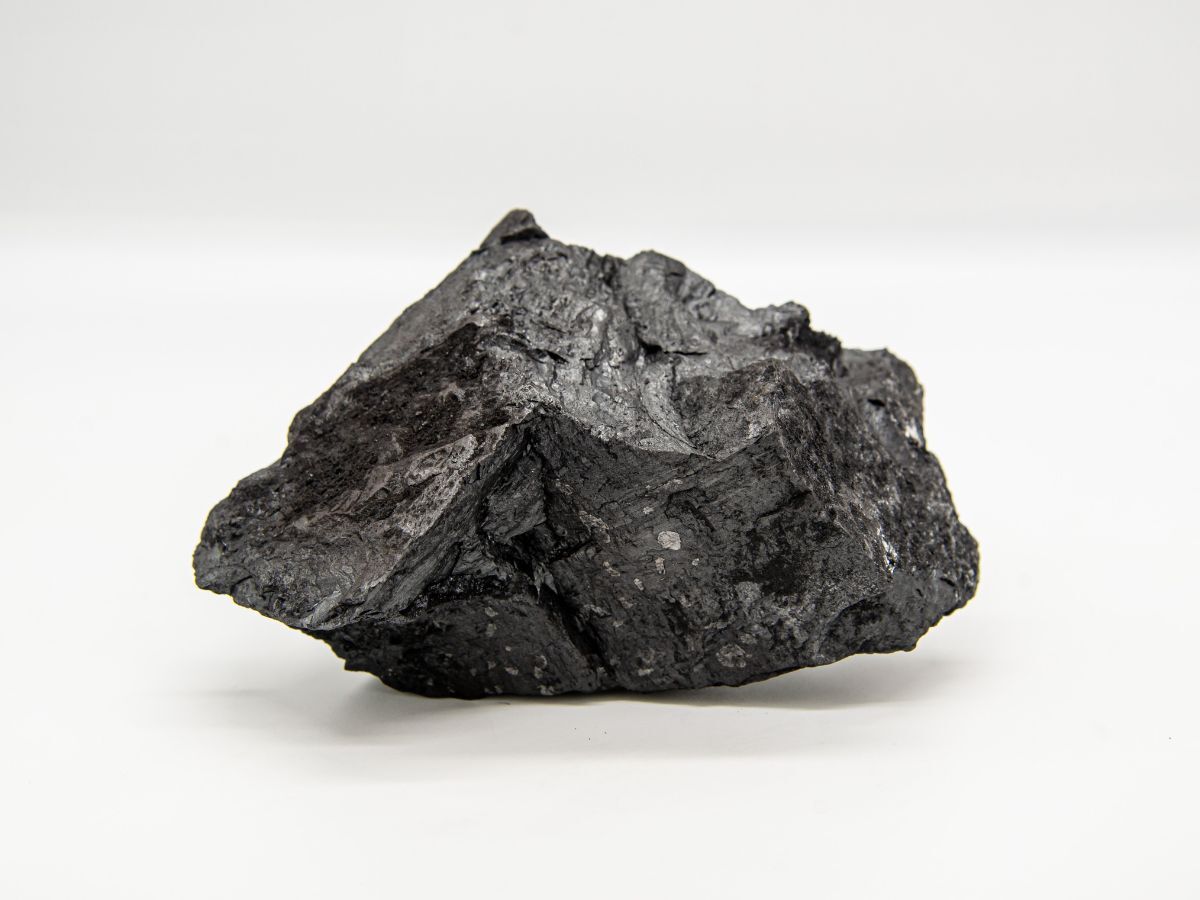
Heat and pressure miraculously transformed coal into diamonds inside the boiling magma cauldrons located deep beneath the Earth's surface.

Once crystallization was complete, this new volcanic mass pushed forward until it broke the Earth's surface, and once it cooled, it formed the places where most diamonds are found today: the kimberlite vents and the lamproite conduits.

Why are diamonds so valuable?

Anything extremely rare becomes valuable. Diamonds, formed millions of years ago, are so because very few survived the long journey from the depths of the earth to the surface.

Obtaining a relatively small quantity of quality gems, as well as industrial diamonds, is not easy, even with today's sophisticated technology. Among those selected, few will reach a size larger than the head of a matchstick.

The diamond, an enduring symbol of love

Until the 15th century, only kings were worthy of wearing diamonds; they symbolize strength, courage, and invincibility. However, over the centuries, the diamond gradually acquired its status as a gift essentially identified with love.

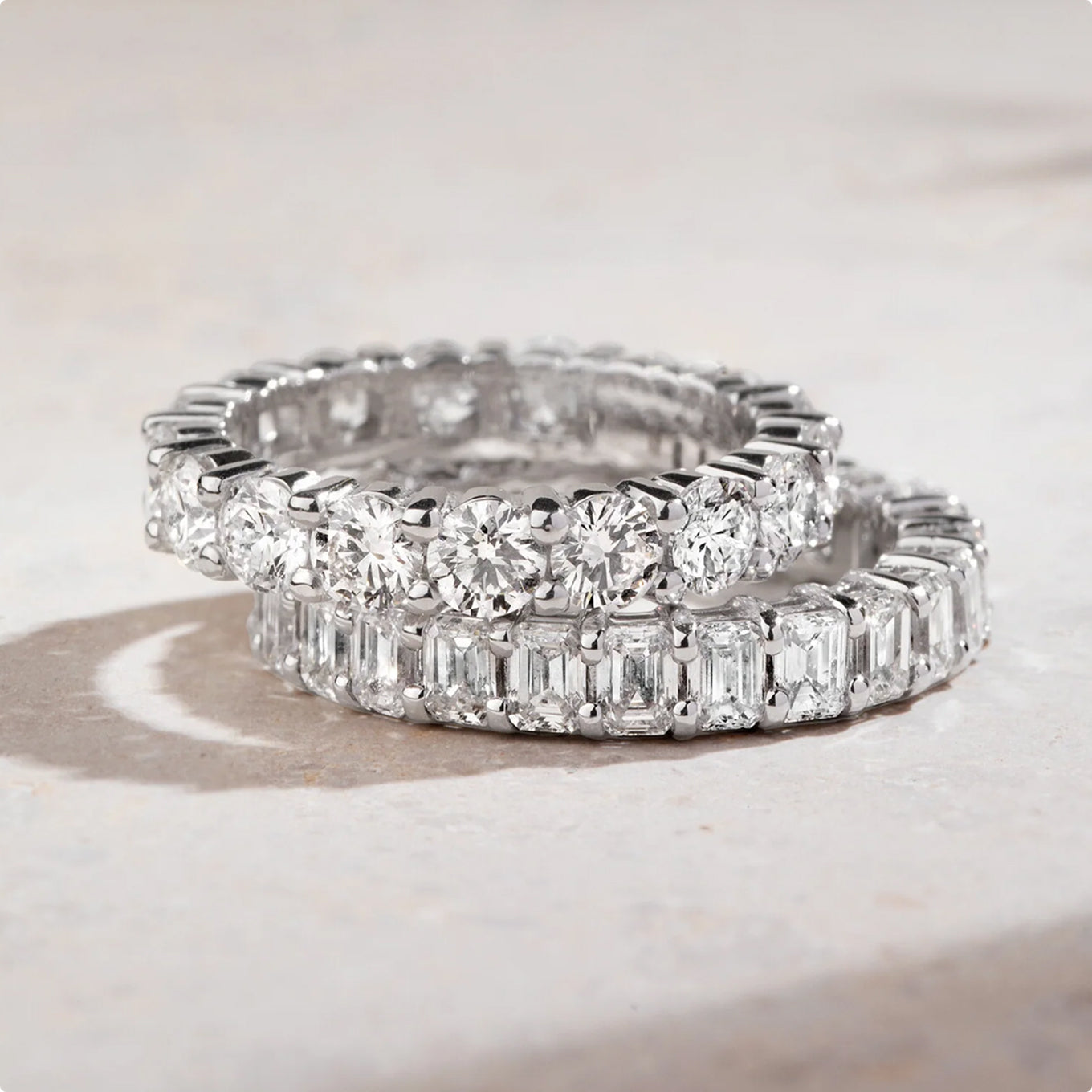
Nowadays, it's common for engagement rings to feature one or more diamonds. It's a durable, unbreakable, and unbreakable stone, and therefore the one that best defines the concept of eternity in love. The word "diamond" itself comes from the Greek and means "indestructible."

How the cut influences the beauty of a diamond

An uncut diamond looks so much like a pebble that most people would pass by without even noticing. Only the skill of the cutter unleashes the wild beauty hidden within. The cutter cannot afford to make a mistake. Not only is the diamond itself at risk, which would lose part of its value, but also the months of work required to cut and polish it. During this process, the stone loses an average of 50% of its original weight.

The beauty of a diamond also depends on how it reflects light. The cutter must find a way to cut the stone so that light enters from the top edge, bouncing back into the interior and exiting again from the same place it entered.

A diamond is judged using four different parameters that are combined in various ways to reach its final value.

Size

Diamond cutting is where man exerts the most direct and fundamental influence, as it will be the skill and imagination of the cutter that unleashes its beauty.

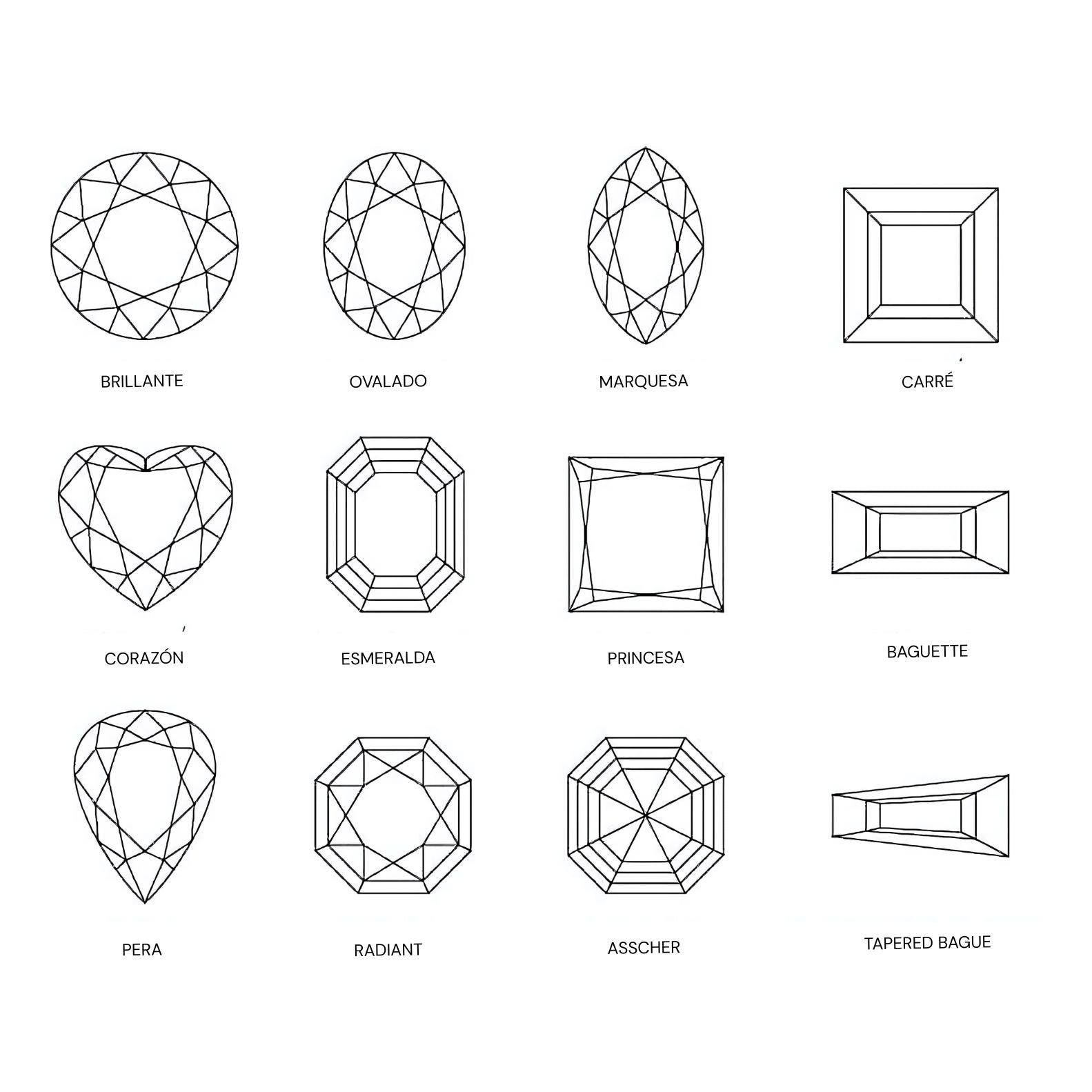
There is a wide range of cuts, from the most traditional shapes (brilliant, marquise, pear, emerald, oval, baguette, princess, or heart) to the most imaginative and creative.

How a diamond captures light

The diamond cut is what allows the light to reflect optimally.

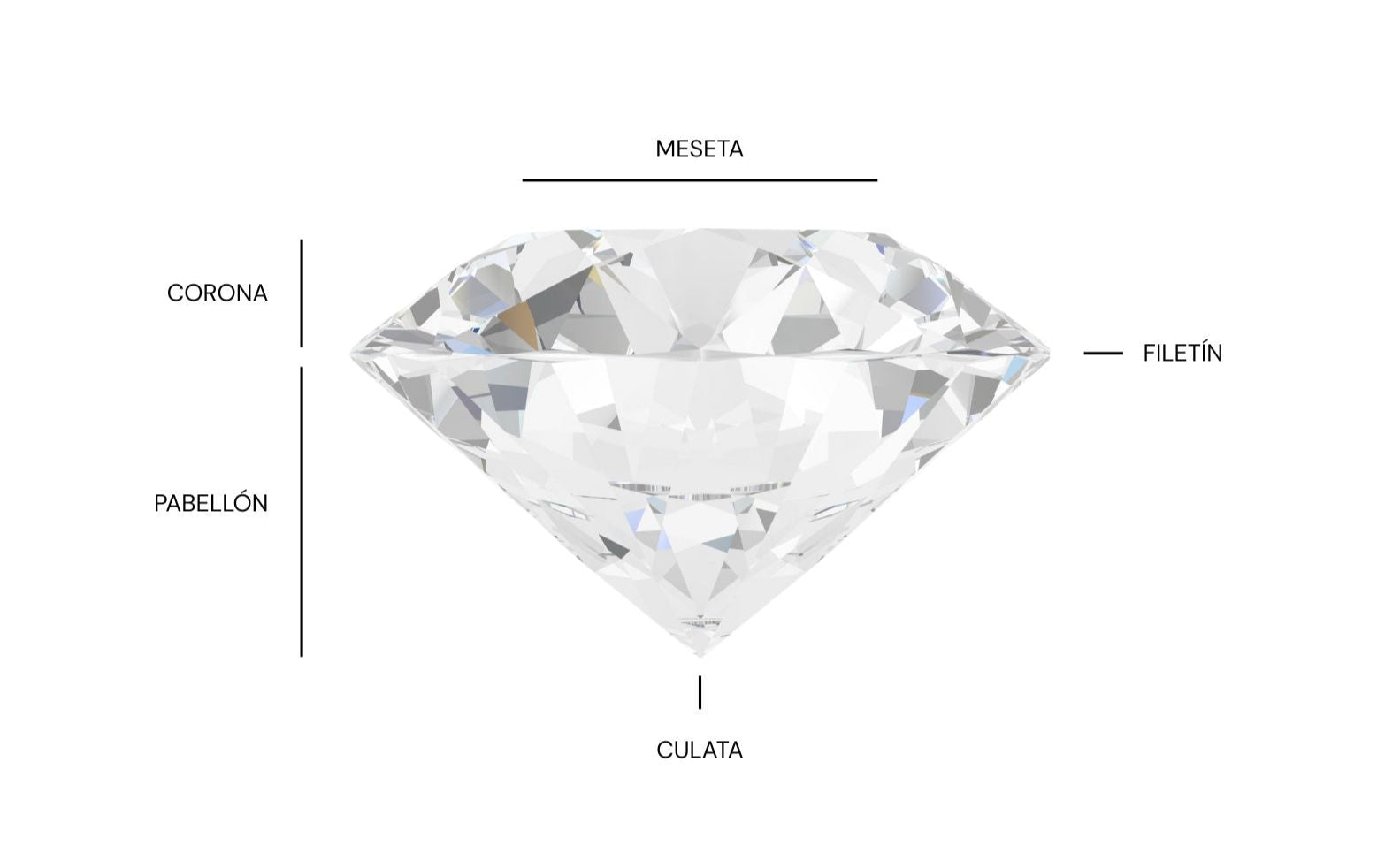
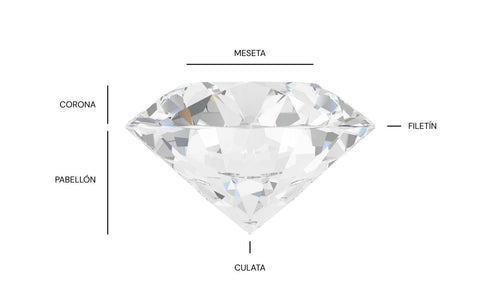
1. When a diamond is cut to the proper proportions, light reflects from one facet to another and then disperses across the plateau, or top, of the stone.

2. If the cut is too deep, some of the light escapes through the opposite side of the pavilion or the lower part.

3. If the carving is shallow, the light escapes through the pavilion or bottom before being reflected.

Color

Most diamonds are apparently colorless, although some may contain slight yellow or brown tones, such as those known as "champagne diamonds." Other diamonds with exceptional colors, such as green, red, blue, pink, or amber, among others, are known as "fancy diamonds."

Diamond color is graded on a scale ranging from D to Z; those graded with a "D" color are the whitest and lightest, and therefore the most expensive.

Purity

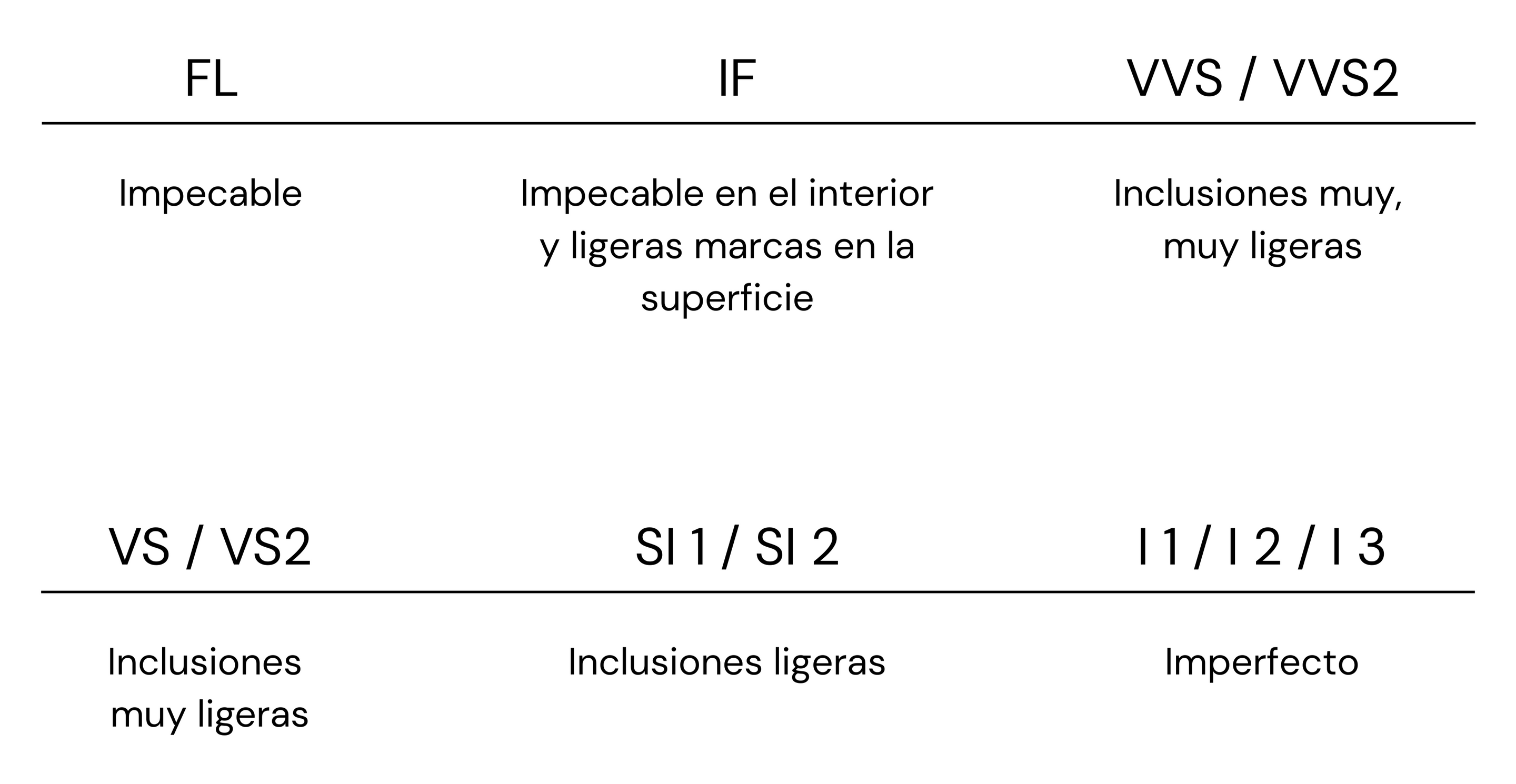
Almost all diamonds contain tiny traces of uncrystallized carbon or small crystals. These inclusions are nature's fingerprints and make each diamond unique. The fewer inclusions, the more exceptional the stone.

There are several international grading systems for classifying diamonds, such as GIA, IGI, and HRD, among others. GIA considers a stone perfect when it has no external or internal inclusions.

Weight

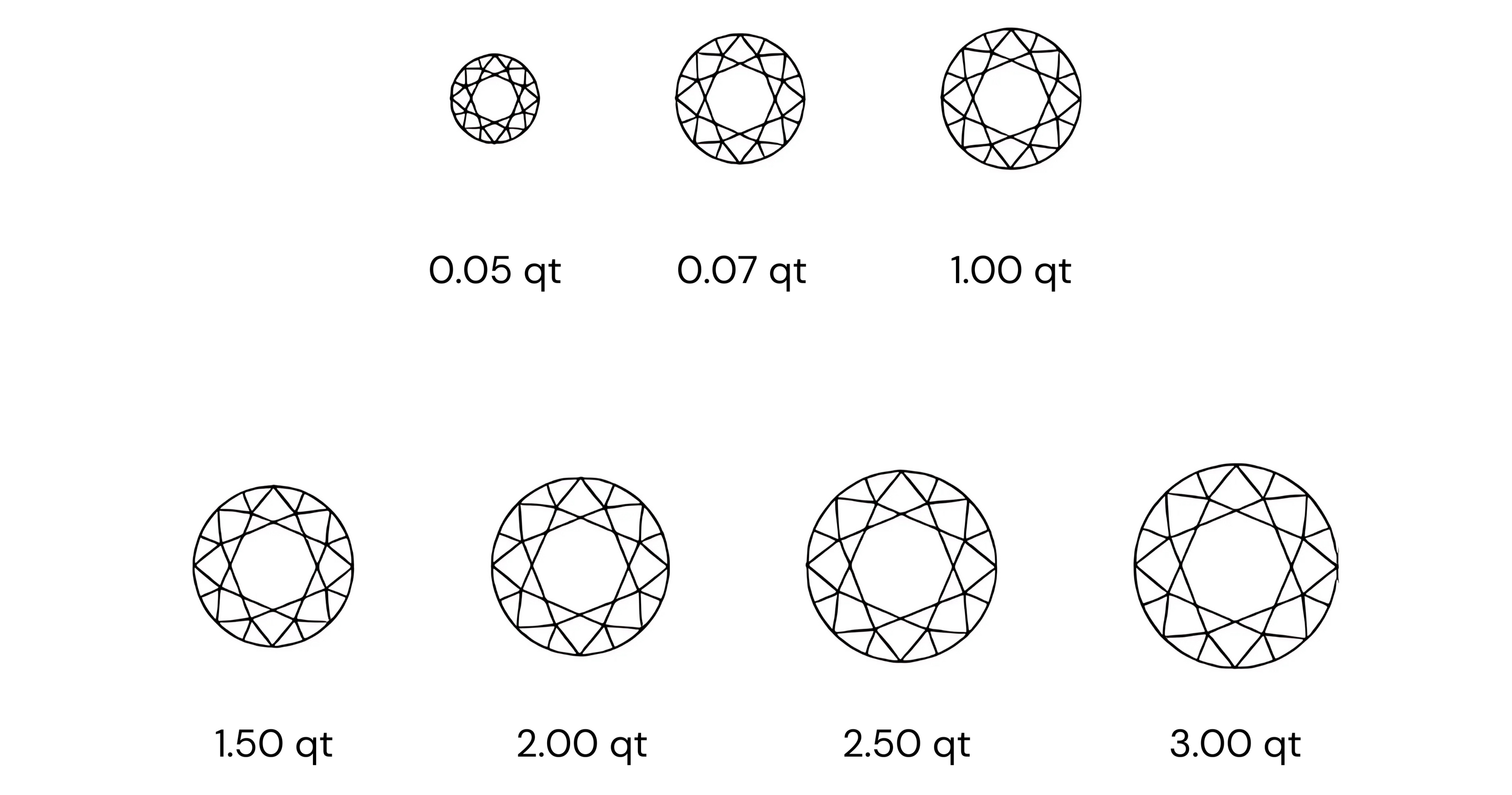
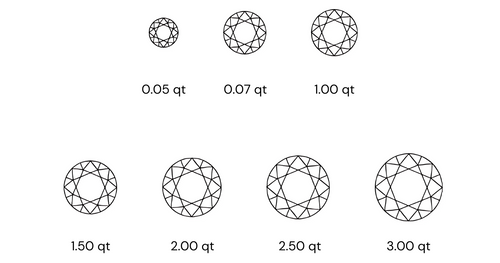
The weight of a diamond is expressed in carats, a word that comes from a natural measurement: the carob seed. The system was later standardized as follows: one carat equals 0.2 grams.

A carat is divided into 100 points, so a 25-point diamond is described as a quarter of a carat or 0.25 carats.

How to care for your diamond

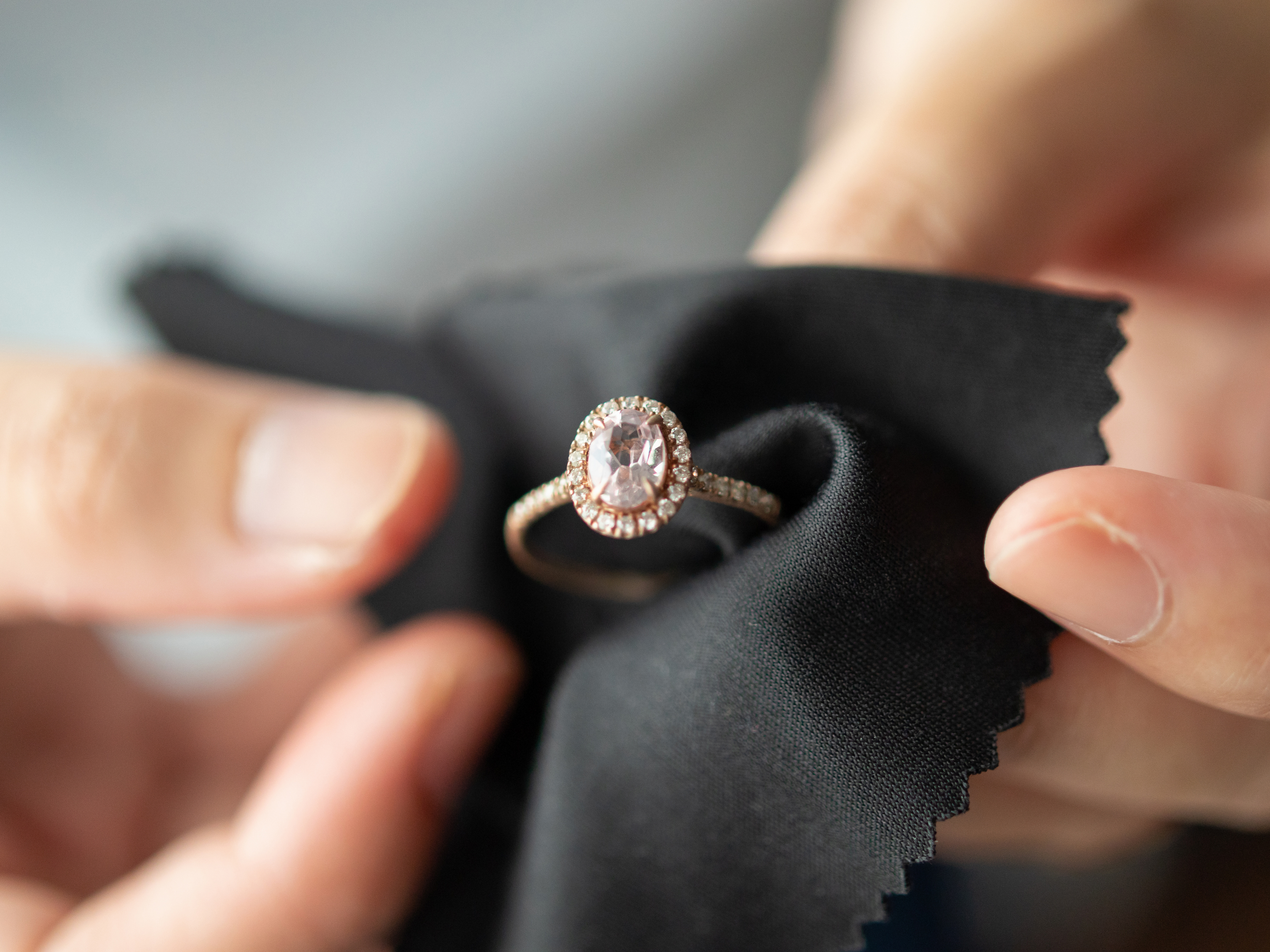
Diamonds require certain care to maintain their brilliance. To clean your jewelry, place it in a small container with water and a mild liquid detergent. Gently brush the stones with a toothbrush. Transfer them to a colander and rinse them under warm running water. Finally, pat dry with a soft, lint-free cloth.

Take your diamonds to a jeweler at least once a year for an inspection to see if the setting is loose or shows signs of wear. Take advantage of this opportunity to have your diamonds professionally cleaned.